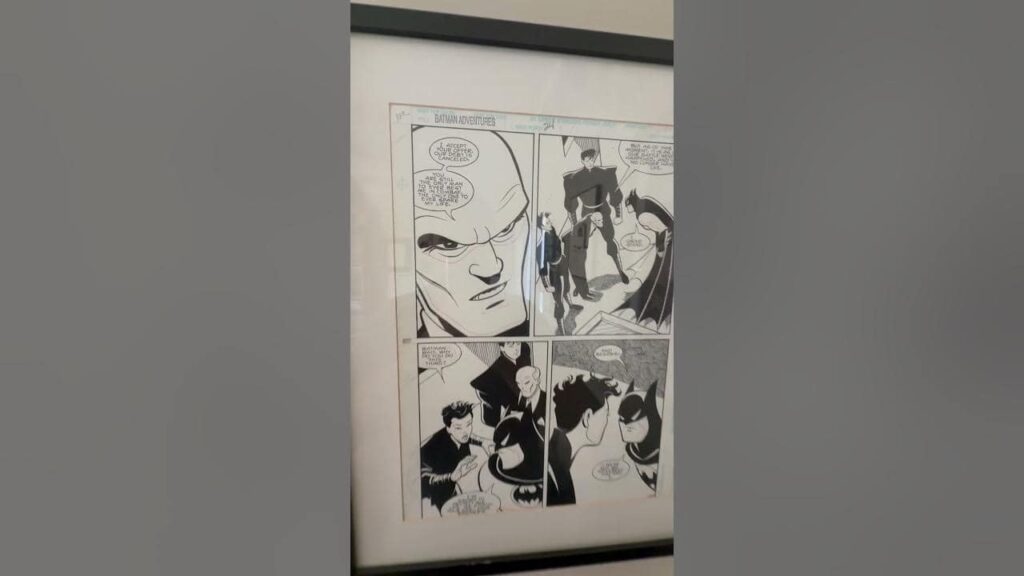
Three Key Takeaways for the Collector
- Original Art as History: This is the single, actual drawing used to make the published page, making it a tangible and unique piece of pop culture history.
- The Animated Series Legacy: The artwork is from The Batman Adventures #24, a comic that faithfully replicated the iconic style of the 1990s Batman: The Animated Series, co-created by Bruce Timm.
- Character Significance: The page holds high collector value because it features a “quintessential image of Batman” across several panels, a major factor in driving demand.
A Window into the Iconic Animated Series Style
The piece in question is an original art page from The Batman Adventures #24, published in September 1994.
This comic series was the direct print continuation of the seminal Batman: The Animated Series, which aired in the 1990s and was co-created by visionary artist Bruce Timm.
The comic perfectly captures the distinctive, dark, and angular Film Noir aesthetic that made the 1990s animated show a critical success and a high point for DC Comics animation. Acquiring original art from this specific run—which featured the work of talented artists like Mike Parobeck and Rick Burchett—is a way to own a direct piece of that celebrated legacy.
The Allure of Character Focus in Collecting
Part of the page’s appeal to the collector was its focus on the Caped Crusader himself. The page features Batman prominently in several panels, which is a key factor that increases desirability among collectors.
The collector noted that the page provides a “quintessential image of Batman,” even with the appearance of a villain who “almost looks like Mr. Freeze in a way” in one panel.
The inclusion of main characters or key story moments greatly influences an art page’s significance and, consequently, its value in the collector market. The more straightforward the importance of the page is, the more valuable it is considered to be.
Expert Collection Tips for Original Comic Art
To maximize the exposure and preservation of your original comic art, follow these best practices:
Preservation is Key
- Use Archival Framing: Display the page using UV-protectant glass and acid-free archival materials (mats and backing) to prevent the ink and paper from fading or deteriorating.
Optimize Online Visibility
- Contextualize Your Postings: When posting the piece online, always include specific keywords like the title, issue number, and artist names (The Batman Adventures #24, Mike Parobeck, Rick Burchett). This helps search engines index your content correctly and connects with dedicated fans.
- Engage the Fan Community: Share your acquisition on dedicated platforms like Batman: The Animated Series fan groups and comic art forums. This drives conversation and helps establish a market benchmark for your specific piece.
Frequently Asked Questions (FAQ)
Q: What is the difference between original art and a comic book?
A: Original art is the single, unique physical page drawn by the artist that was scanned to print the comic. The comic book is a mass-produced, printed publication. Since original art is one-of-a-kind, it is generally significantly more valuable than the comic book itself.
Q: Who created Batman: The Animated Series?
A: The show was developed by Bruce Timm and Eric Radomski, launching in 1992. It is a foundational part of the DC Animated Universe.
Q: How is the value of original art determined?
A: Value is primarily driven by Significance (first appearances, key story moments) and Rarity/Demand. Other factors include the reputation of the artist, the condition of the page, and the prominence of main characters on the page.